Self-Deployable 4D-Printed Polypill Characterisation
Introduction
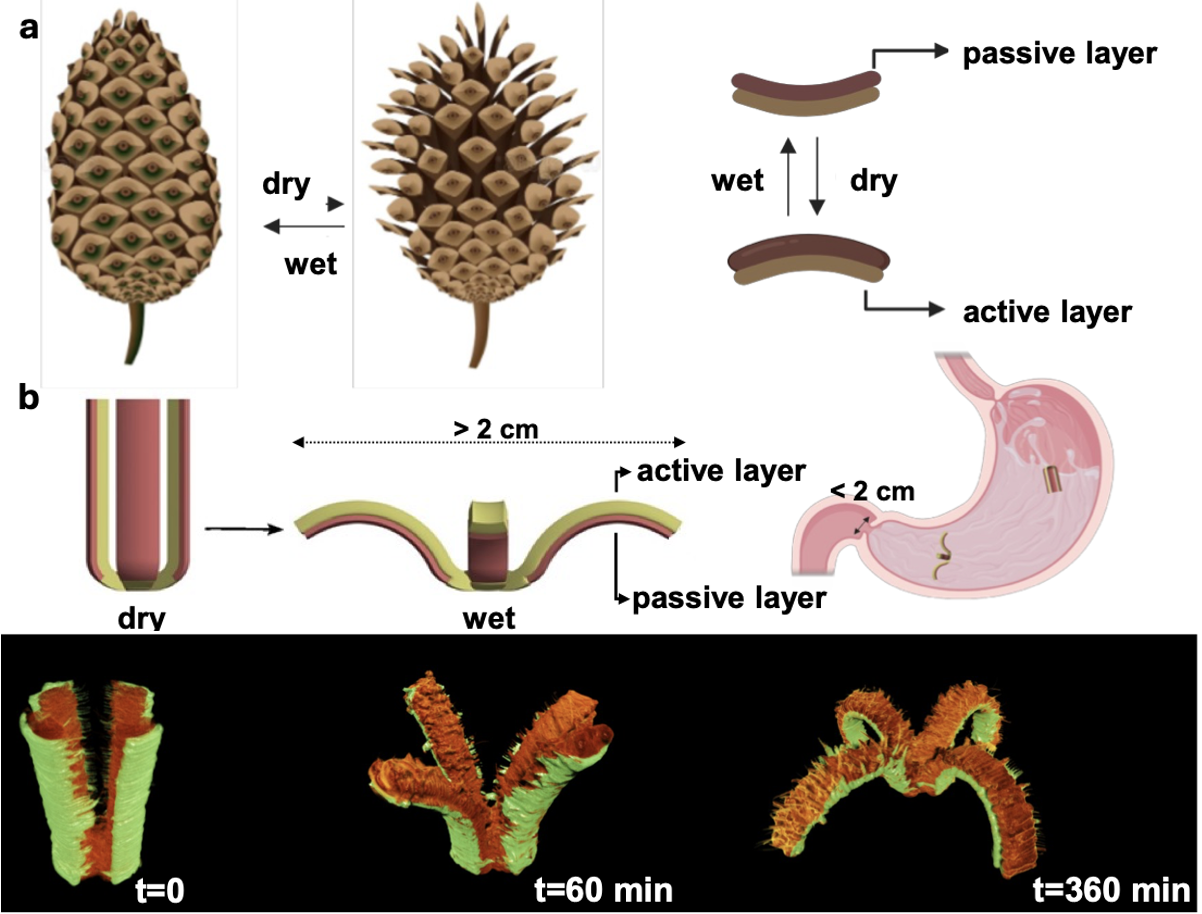
Static and time-resolved X-ray computed micro-tomography (μCT) was applied in studying the mechanochemical properties and deployment dynamics of a 4D-printed polypill. Inspired by hygromorphic actuators such as pine cone scales, this polypill aims to improve gastric retention and sustained drug release for chronic disease management.
The polypill employs a bilayer design with active and passive layers. The active layer, made of swelling polymers, facilitates self-deployment in response to gastric fluid, while the passive layer maintains structural integrity and regulates drug release. This novel drug delivery system enables prolonged gastric retention and a sustained release mechanism, thus reducing the need for frequent dosing.
Role of μCT
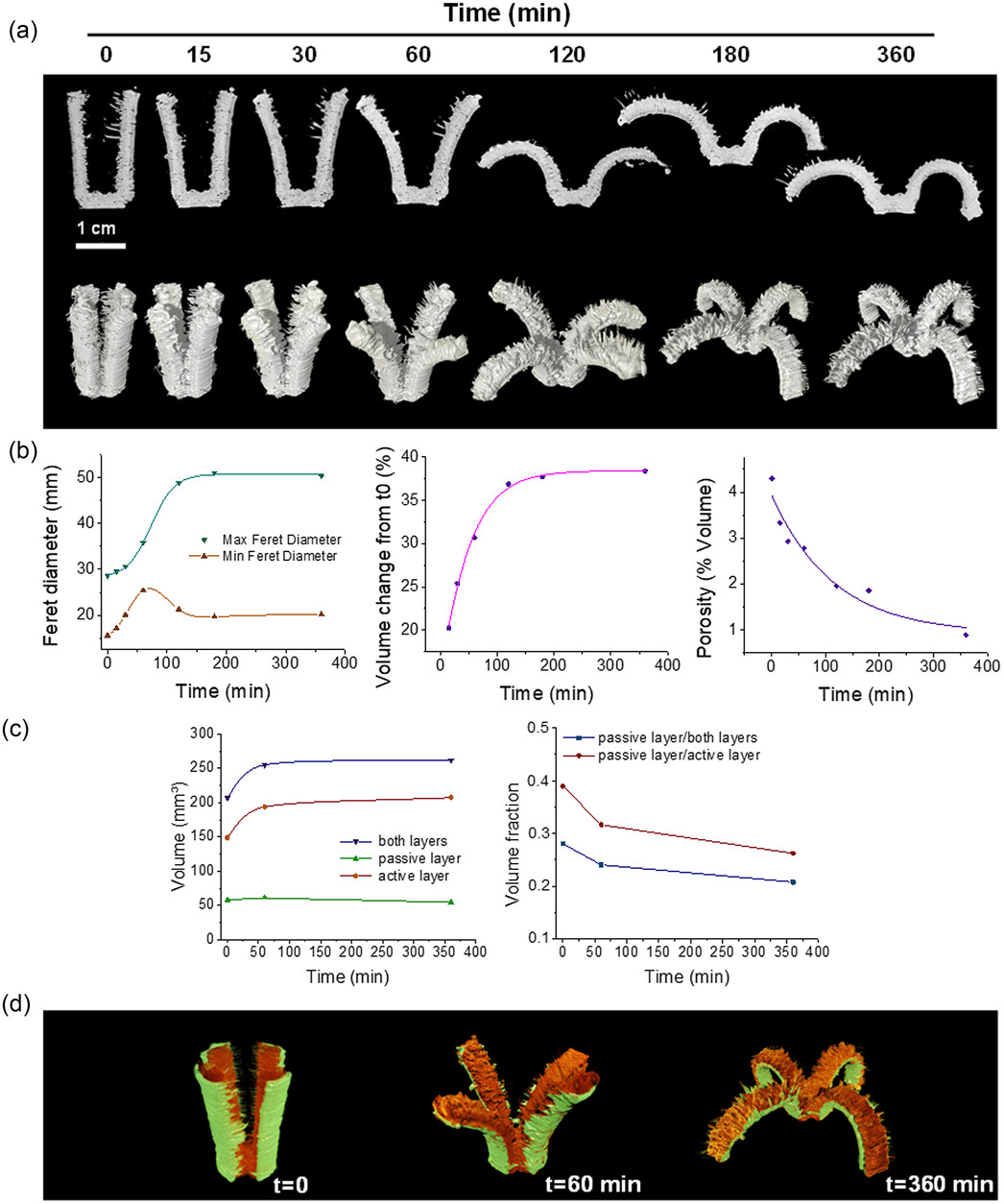
X-ray μCT imaging played a critical role in assessing the polypill’s deployment dynamics and structural changes during hydration. These imaging techniques provided valuable insights into the morphometric, volumetric, and structural characteristics of the polypill. μCT was used to perform morphometric analysis by tracking changes in the polypill’s maximum and minimum Feret diameters during swelling. Time-resolved imaging quantified a significant volumetric increase of 40% during hydration and revealed a corresponding exponential decline in porosity, indicating that material swelling filled pore spaces play a critical role in the deployment mechanism. It also highlighted the interaction between the active (swelling) and passive (non-swelling) layers.
Experimental Highlights
The experiments were conducted under simulated gastric conditions and allowed for accurate reproduction of the polypill’s behaviour in the human body. The technique was also used to validate computational finite element analysis (FEA) models.
Output