Non-Destructive 3D Imaging of Printed Medicines Structural and Functional Insights using X-ray microtomography (μCT)
Introduction
3D printing is reshaping the way medicines are designed and manufactured. Unlike conventional tablets, which are pressed into standard forms, 3D-printed medicines (a.k.a printlets) can be produced with complex geometries, personalised doses, and tailored release profiles. This new capability opens exciting opportunities for truly patient-centred care, from paediatric formulations to multi-drug polypills.
However, these novel dosage forms pose new analytical challenges. Their internal architecture—comprising multi-material domains, interfaces, and hierarchical porosity—directly impacts critical quality attributes such as disintegration, dissolution, and bioavailability. Conventional analytical methods are frequently destructive, two-dimensional, or lack sufficient spatial resolution to resolve microstructural features.
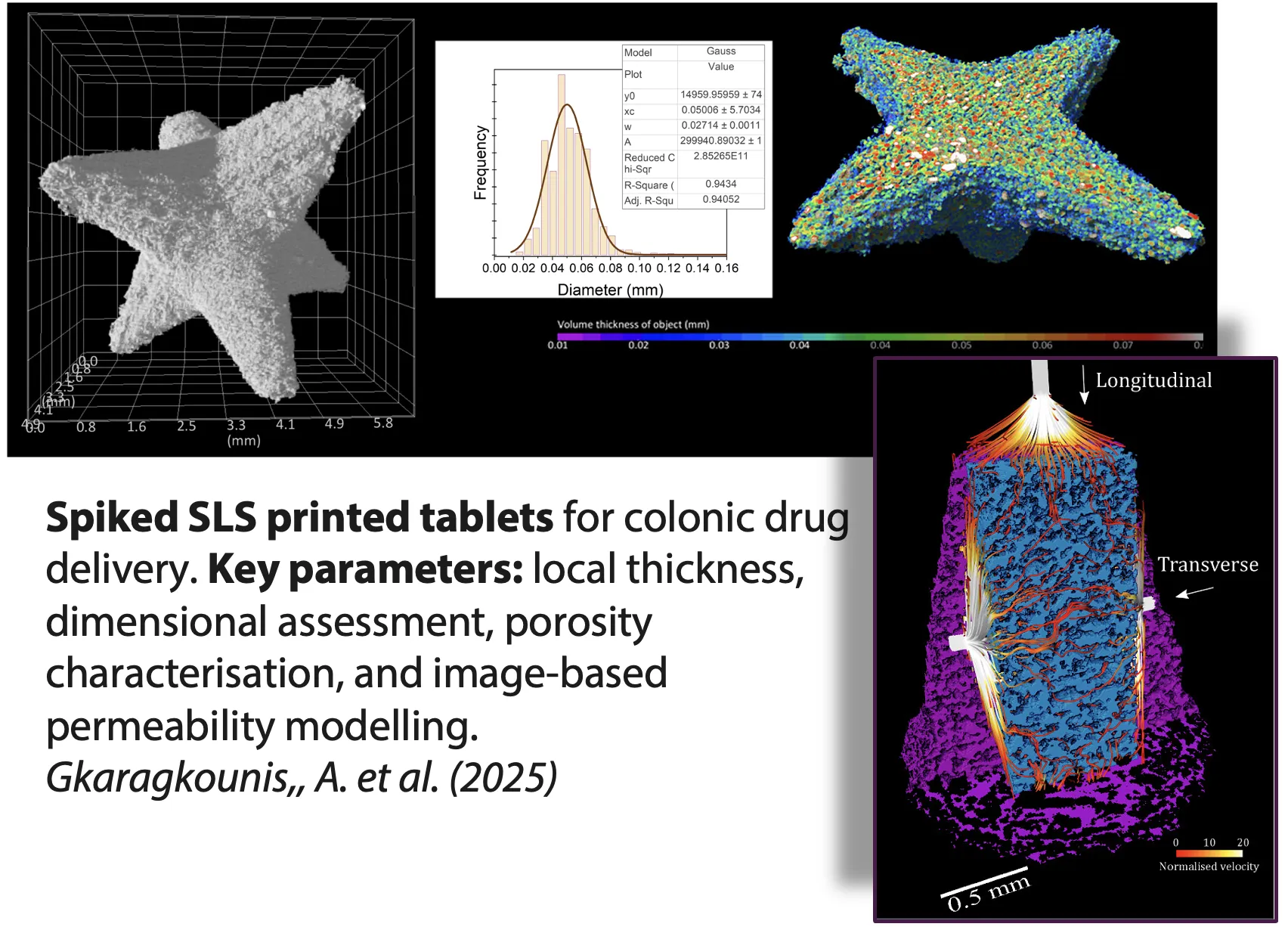
X-ray microtomography (μCT) provides a solution. At the University of Southampton’s μ-VIS X-ray Imaging Centre, we deploy μCT to achieve non-destructive, high-resolution volumetric characterisation of 3D-printed medicines, capturing both their morphological fidelity and functional dynamics.
The Challenge
3D-printed solid dosage forms are fabricated via sequential layer-by-layer deposition, introducing unique sources of variability not present in direct compression. Subtle inaccuracies in extrusion parameters, incomplete fusion, or interfacial heterogeneity can yield concealed porosity, microstructural defects, or dimensional deviations from the nominal computer-aided design (CAD). Such deviations may alter disintegration kinetics, dissolution profiles, release reproducibility, and ultimately therapeutic equivalence.
As in vivo performance is governed not only by the active pharmaceutical ingredient but also by the dosage form’s microstructural and physicochemical architecture, advanced non-destructive imaging techniques are required. An optimal methodology must combine structural metrology with dynamic functional analysis to ensure mechanistic understanding and regulatory compliance.
Our Approach
Micro-computed tomography offers micrometre-scale, volumetric imaging that simultaneously delivers qualitative visualisation and quantitative metrology. Each scan generates a 3D dataset that can be interrogated to:
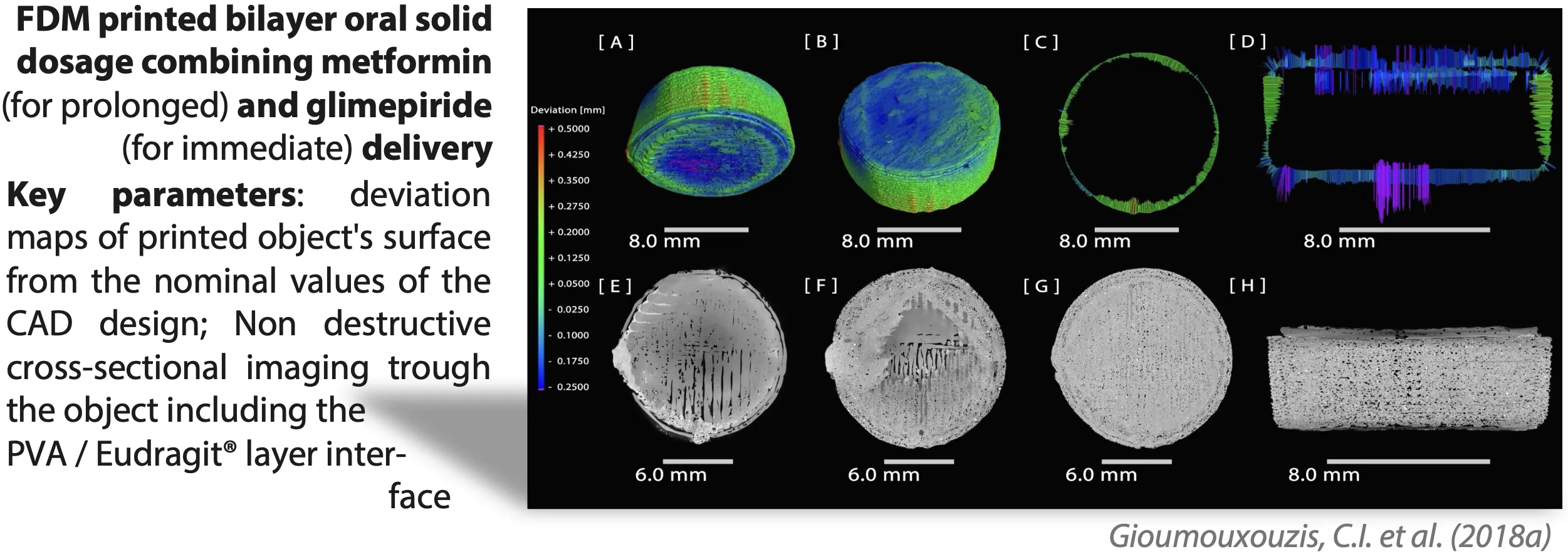
- Compare CAD models against printed outputs to quantify geometric deviations.
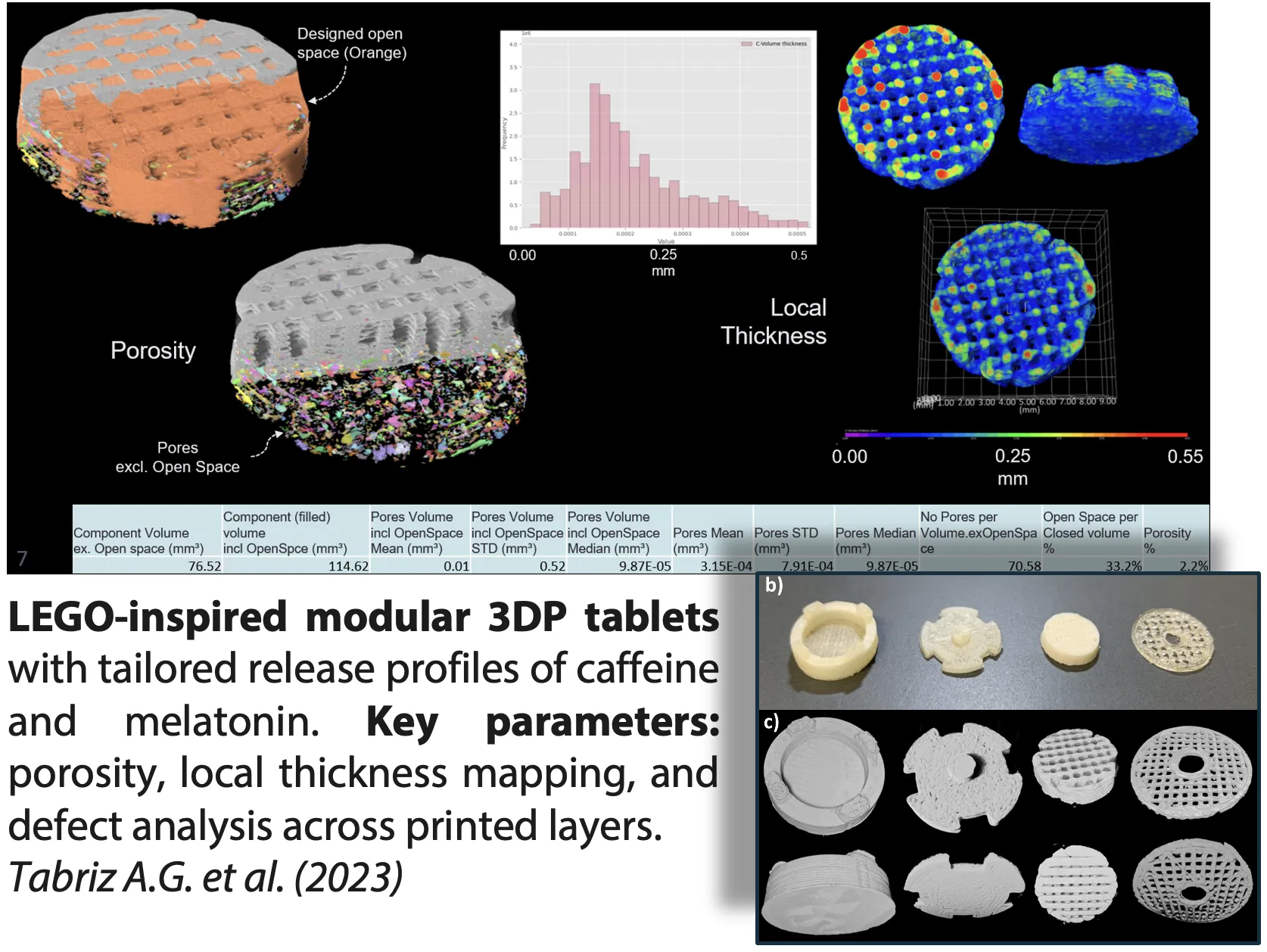
- Perform dimensional and thickness mapping for metrological validation.
- Characterise pore networks, inclusions, and density heterogeneity across multi-material systems.
- Assess interfacial integrity between distinct polymeric and crystalline phases.
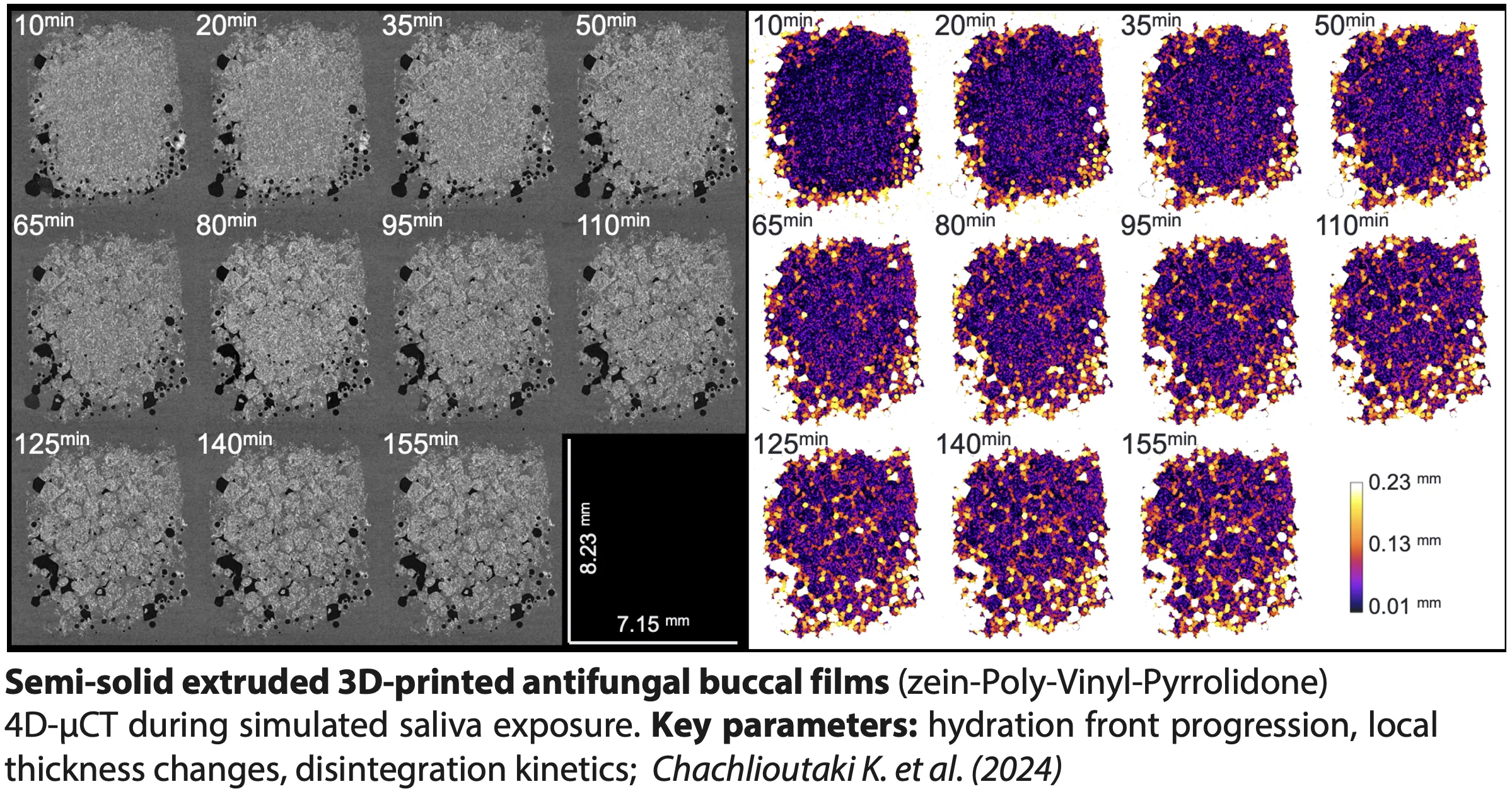
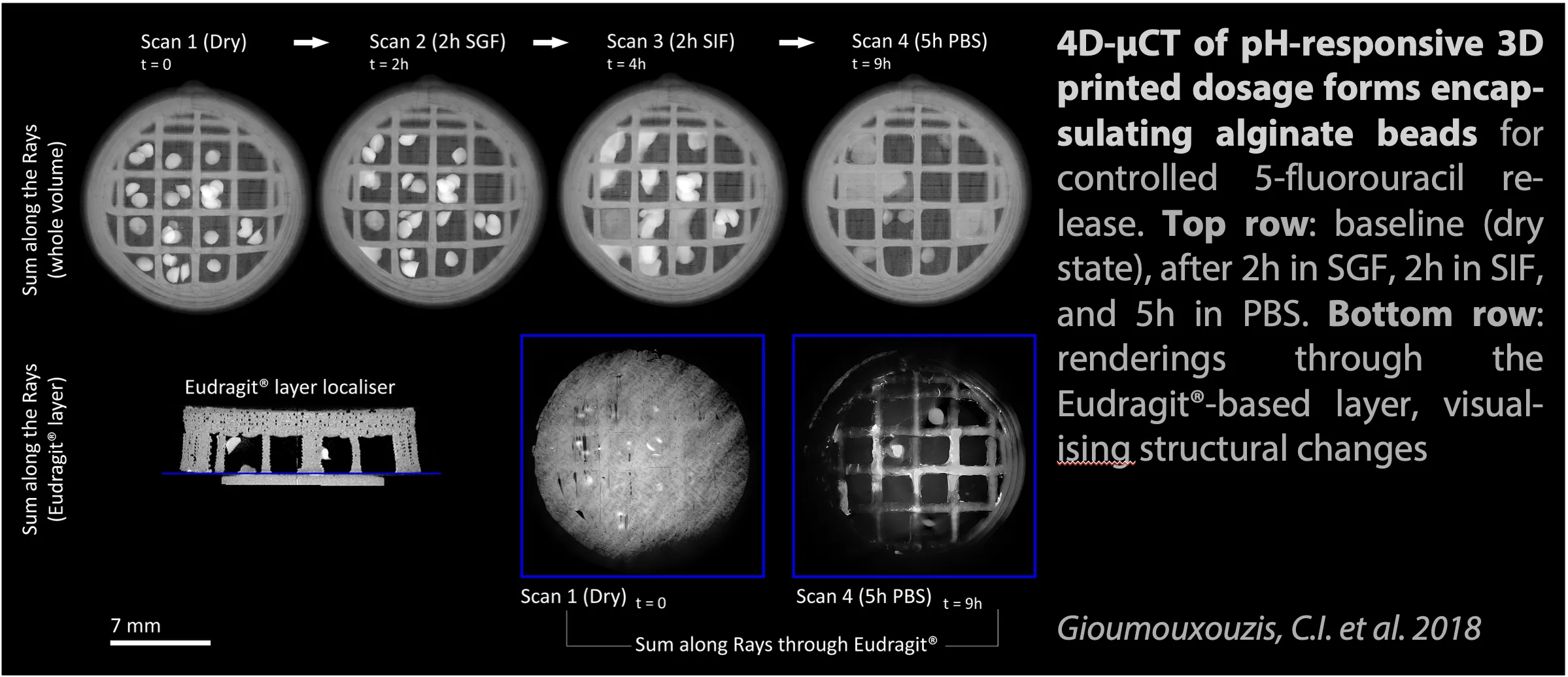
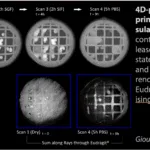
Beyond static structural analysis, time-resolved μCT (4D-μCT) enables in situ monitoring of performance attributes. It captures dissolution front progression, swelling dynamics, structural collapse, and erosion kinetics under physiologically simulated conditions, thereby linking internal architecture to functional behaviour.
Case Examples
Our collaborative studies demonstrate the breadth of μCT applications in pharmaceutical R&D. For example,
- LEGO®-inspired modular tablets were evaluated for porosity distribution, inter-layer adhesion, and release profiles of caffeine and melatonin. A bilayer oral solid dosage form combining metformin (extended release) and glimepiride (immediate release) was characterised through deviation mapping and interfacial imaging of polymeric layers.
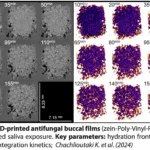
- In semi-solid systems, antifungal buccal films were monitored by 4D-μCT to quantify hydration front progression, thickness variation, and disintegration kinetics during simulated salivary exposure.
- pH-responsive alginate bead encapsulationswere assessed dynamically, revealing structural transformations across simulated gastric and intestinal media.
These case studies highlight the unique value of μCT in elucidating the relationship between fabrication parameters, microstructure, and pharmacotechnical performance.
Impact
μCT provides a robust platform for mechanistic validation of additive manufacturing in pharmaceutical technology. It enables non-destructive, high-resolution evaluation of internal architecture and functional behaviour.
For researchers and industry stakeholders, it delivers quantitative evidence of fidelity between design intent and manufactured output. For regulators and clinicians, it strengthens quality assurance frameworks and supports translational readiness. Ultimately, for patients, it ensures that innovative dosage forms are both reliable and safe.
Key take-home messages:
- μCT provides non-destructive, micrometre-resolution characterisation of 3D-printed dosage forms.
- It enables dimensional metrology, porosity quantification, and interface integrity assessment.
- 4D-μCT offers dynamic functional analysis of disintegration, dissolution, and swelling processes.
- μCT underpins regulatory compliance, mechanistic validation, and clinical translationof personalised medicines.
Output
-
- Gkaragkounis et al., Spiked Systems for Colonic Drug Delivery: Architectural Opportunities and Quality Assurance of Selective Laser Sintering, ACS Biomaterials Science & Engineering, 2025
- Chachlioutaki et al., Tailored Sticky Solutions: 3D-Printed Miconazole Buccal Films for Pediatric Oral Candidiasis, AAPS PharmSciTech, 2024
- Zgouro et al., A floating 3D printed polypill formulation for the coadministration and sustained release of antihypertensive drugs, International Journal of Pharmaceutics, 2024
- Tabriz et al., 3D Printing of Personalised Carvedilol Tablets Using Selective Laser Sintering, Pharmaceutics, 2023
- Tabriz et al., 3D printing of LEGO®-like designs with tailored release profiles for treatment of sleep disorder, International Journal of Pharmaceutics, 2023
- Katsamenis et al., 3D Printing of Personalised Carvedilol Tablets Using Selective Laser Sintering – Underlying Data, Zenodo, 2023
- Gioumouxouzis et al., An osmotic 3D printed solid dosage form for controlled release of active pharmaceutical ingredients, European Journal of Pharmaceutical Sciences, 2020
- Gioumouxouzis et al., An osmotic 3D printed solid dosage form combining metformin for prolonged and glimepiride for immediate drug delivery, European Journal of Pharmaceutical Sciences, 2018
- Gioumouxouzis et al., Controlled release of 5-fluorouracil from alginate beads encapsulated in 3D printed pH-responsive solid dosage forms, AAPS PharmSciTech, 2018
- Gioumouxouzis et al., 3D printed oral solid dosage forms containing hydrochlorothiazide for controlled drug delivery, Journal of Drug Delivery Science and Technology, 2017