October 04, 2026
Battery Imaging Library
A new open-access resource offers more than 4.5 terabytes of raw and reconstructed battery imaging data, covering 13 imaging techniques and a wide range of length scales.
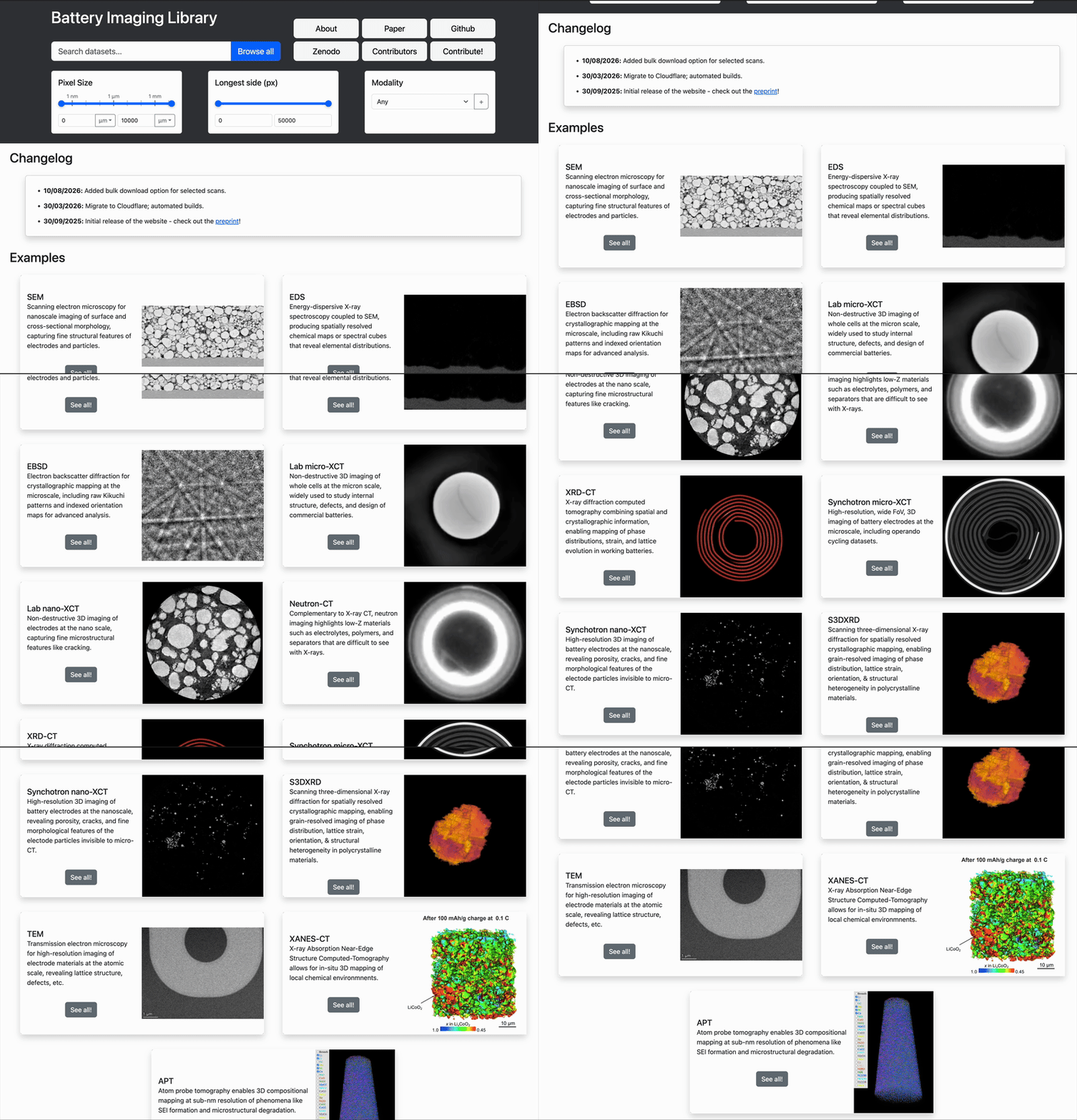
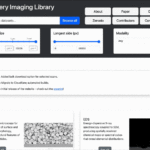
Finding good experimental imaging data is a bottleneck in battery research. Datasets are often held on private drives, stored in different formats, and shared only after processing. The Battery Imaging Library (BIL), published in Digital Discovery on 8 September 2026, is an attempt to change that. The authors describe it as the first open, curated collection of multi-modal, multi-scale battery imaging data, with a searchable website and a persistent identifier for every dataset.
μ-VIS staff members Dr Fernando Alvarez Borges and Dr Katy Rankin are co-authors of the paper. The work brought together 48 scientists from 18 institutions and was led by Dr Antony Vamvakeros (Imperial College London and Finden Ltd), with Ronan Docherty of Imperial as lead author.
μ-VIS’s contribution
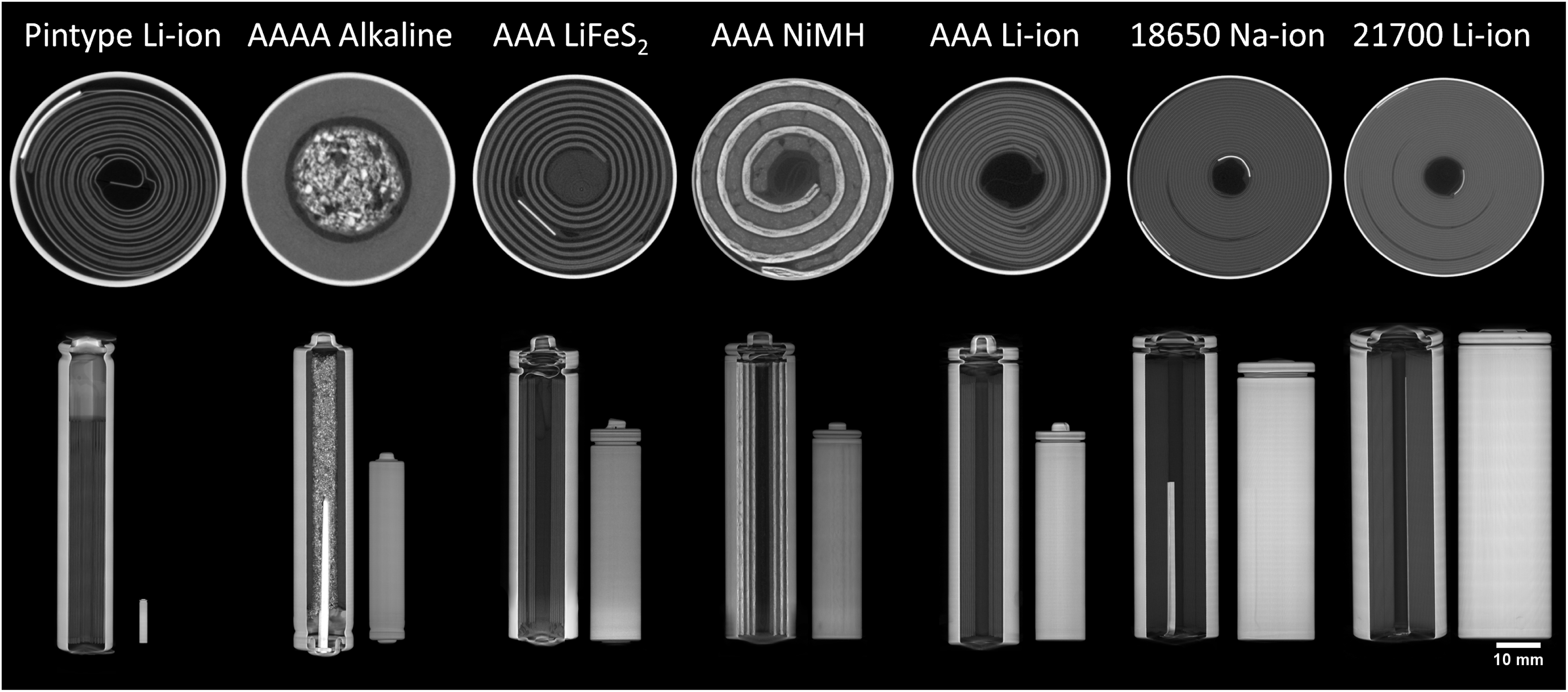
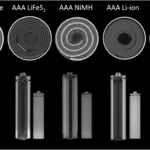
Fernando and Katy performed the laboratory X-ray micro-CT measurements at the University of Southampton, using the Diondo D5 system at μ-VIS. The scans cover a range of commercial cells, including Li-ion, Na-ion, NiMH and alkaline types, in several formats. Both the raw and the reconstructed data are available through the library.
What the library contains
BIL combines data acquired at synchrotrons, neutron facilities, and university and national laboratories, from single particles up to whole cells. It includes:
-
- Raw experimental data, such as radiographs, sinograms (the raw measurements from which a CT image is computed), and X-ray and electron diffraction patterns, alongside reconstructed images.
- Operando datasets, which are measurements taken while a battery is in operation, and multi-resolution datasets of the same sample at different scales.
- Complementary techniques. For example, neutron CT gives different contrast from X-rays and helps to visualise lithium-containing components, and Diamond Light Source’s I12-JEEP beamline provided static and dynamic X-ray micro-CT of commercial cells.
- Open-source Python tools for preprocessing and reconstructing several CT modalities, so analysis can be reproduced from the raw data.
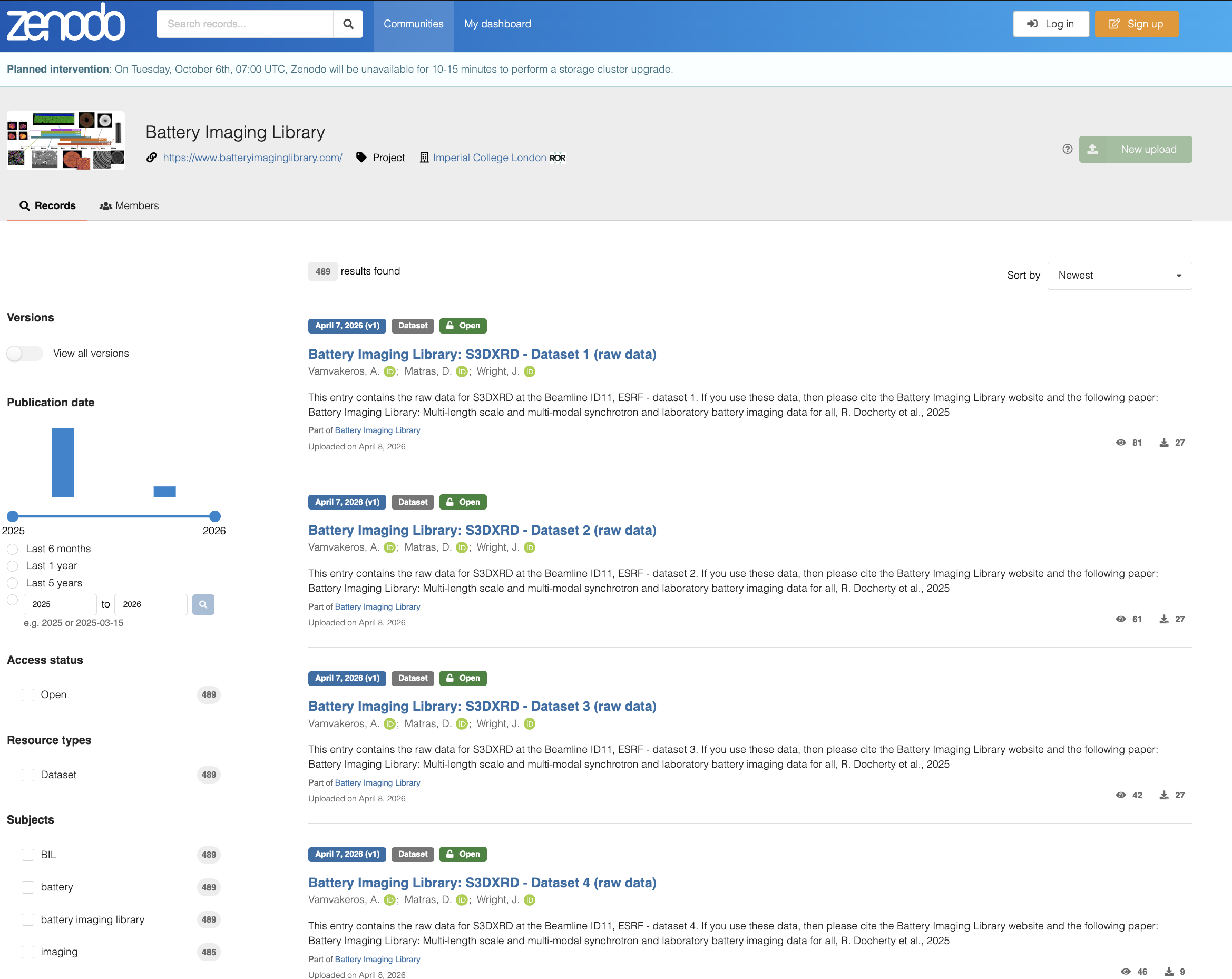
Every dataset has a Zenodo DOI and metadata, following FAIR principles (findable, accessible, interoperable, reusable).
Why it matters
The authors set out three aims: widening access to data for researchers at every career stage, giving method developers realistic data to test imaging and analysis techniques on, and providing practical material for teaching. Because the library includes commercial cells and raw measurements, it can be used to benchmark segmentation and reconstruction algorithms and to train machine learning models.
Access the library
The Battery Imaging Library is available at batteryimaginglibrary.com. For laboratory micro-CT of energy materials and other samples at μ-VIS, contact us at muvis@soton.ac.uk.
Reference: Docherty, R. et al. Battery imaging library: multi-length scale and multi-modal synchrotron and laboratory battery imaging data for all. Digital Discovery (2026). doi:10.1039/D6DD00321D
Output
- batteryimaginglibrary.com
- Docherty, R. et al. Battery imaging library: multi-length scale and multi-modal synchrotron and laboratory battery imaging data for all. Digital Discovery (2026). doi:10.1039/D6DD00321D
- https://zenodo.org/communities/batteryimaginglibrary/